

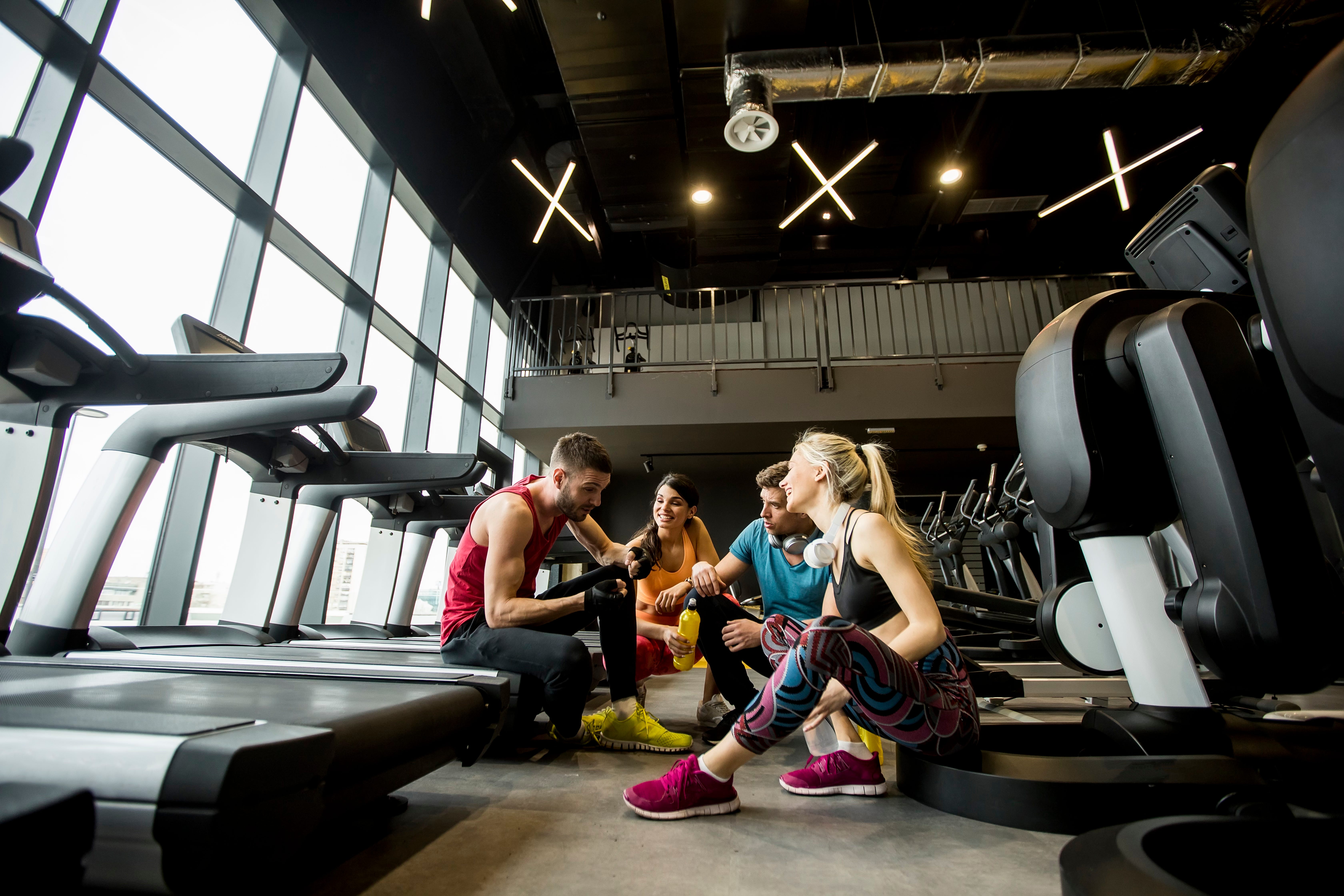
When I got sober, I rebuilt my life around routines that felt safe.
One of the most important was the gym.
I go every morning at 6 a.m., six days a week. Early enough that excuses don’t have time to form. Consistent enough that it anchors my day. Over time, the gym became more than exercise. It became structure. Familiar faces. A place where my body and mind could work together instead of against each other.
It became, without me ever saying it out loud, a sober space.
About a month ago, I walked into class like I always do. Same time. Same room. Same rhythm. A few people were celebrating milestone sessions. Seven hundred and fifty classes. One thousand classes. Real accomplishments.
After class ended, someone brought out champagne and orange juice.
Mimosas. At 7 a.m. In the gym.
I could smell it immediately.
The reaction surprised me.
I wasn’t tempted. I wasn’t afraid I’d drink. What I felt was something closer to frustration. A kind of quiet, selfish irritation.
This was supposed to be safe.
When Safety Is Assumed, Not Promised
The gym never advertised itself as alcohol-free. No one promised me anything. I had simply built an expectation in my own head.
This was where I came to take care of myself. Where the culture was about health, discipline, and showing up. The owner regularly talks about living better, eating better, being intentional with your body.
And yet here we were, drinking champagne in workout clothes before most people had finished their first cup of coffee.
Part of me wanted to judge it. To say it was hypocritical. To say it didn’t belong there.
Another part of me knew that wasn’t fair.
The people celebrating didn’t have a drinking problem, at least not that I know of. They weren’t doing anything wrong. They were marking an achievement in a way that felt normal to them. For most of the world, a mimosa is harmless. Festive. Social.
I was the outlier.
The Uncomfortable Question
That’s where the real question surfaced.
Should certain spaces be alcohol-free by default?
Not because alcohol is evil. Not because everyone has a problem. But because some people do, and they rely on certain environments to stay steady.
Gyms. Yoga studios. Wellness retreats. Early morning spaces built around health and routine.
Is it reasonable to expect alcohol not to be there?
Or is that expectation something sober people have to manage on their own?
There isn’t an easy answer.
On one hand, the world does not owe us sobriety-friendly environments. Alcohol is normalized everywhere. Expecting it to disappear completely is unrealistic.
On the other hand, it’s not unreasonable to want spaces dedicated to health to reflect that value consistently.
Both things can be true.
What Sobriety Teaches You About Boundaries
Sobriety has taught me that boundaries are not demands. They’re decisions.
I can’t control what other people celebrate or how they do it. I can’t ask the world to rearrange itself around my recovery.
But I can notice when an environment no longer feels supportive. I can choose how close I stand to it. I can decide whether to stay, leave, or quietly adjust my expectations.
That morning, I finished class, said a few hellos, and left.
No confrontation. No announcement. Just information collected.
Letting Go of the Illusion of Safe Spaces
One of the harder lessons of sobriety is realizing that truly “safe” spaces are rare.
Even places that feel aligned with recovery can surprise you. Even routines built with intention can crack around the edges.
That doesn’t mean they’re broken.
It means we have to hold our expectations more loosely.
The gym is still important to me. I still go every morning. I still value what it gives me. But I no longer assume it will protect me from everything I’d rather not see.
That responsibility is mine now.
A Question Worth Sitting With
I don’t think this is about mimosas or gyms, really.
It’s about how sober people move through a world that still drinks freely. It’s about learning when to ask for accommodation and when to quietly adapt. It’s about recognizing that discomfort doesn’t always mean danger, but it does mean something is worth paying attention to.
Should there be alcohol-free spaces?
Probably.
Should we expect every healthy space to be one of them?
Probably not.
Sobriety doesn’t give us control over the environment. It gives us clarity about what we need, and the responsibility to respond accordingly.
That morning reminded me of something important.
Recovery isn’t about building a bubble.
It’s about learning how to stand steady when the world doesn’t change for you.
And sometimes, that lesson arrives at 7 a.m., holding a champagne flute.
The yoga studio I first began practicing at was strictly no substance use or promotion. They didn’t align with any event or company that promoted substance use. At the time, I wasn’t sober, and I thought it was a bit absurd but I thought “isn’t my business!”
I went through their yoga teacher training a year or so later, still not sober, but respected their small business values.
Three years later, a drunken mess of a person, and finally sick of my shit, I got sober. Going into my third year of sobriety, I cannot tell scream loud enough how important her convictions to stay a clean yoga studio was and is to someone who is in recovery.
I am now going into a 300HR YTT with the same studio, to become a 500HR RYT. The hope is to open a studio of my own in Colorado someday. And one thing I can promise is it will be a safe space for people in recovery.
Thanks for sharing this story!