

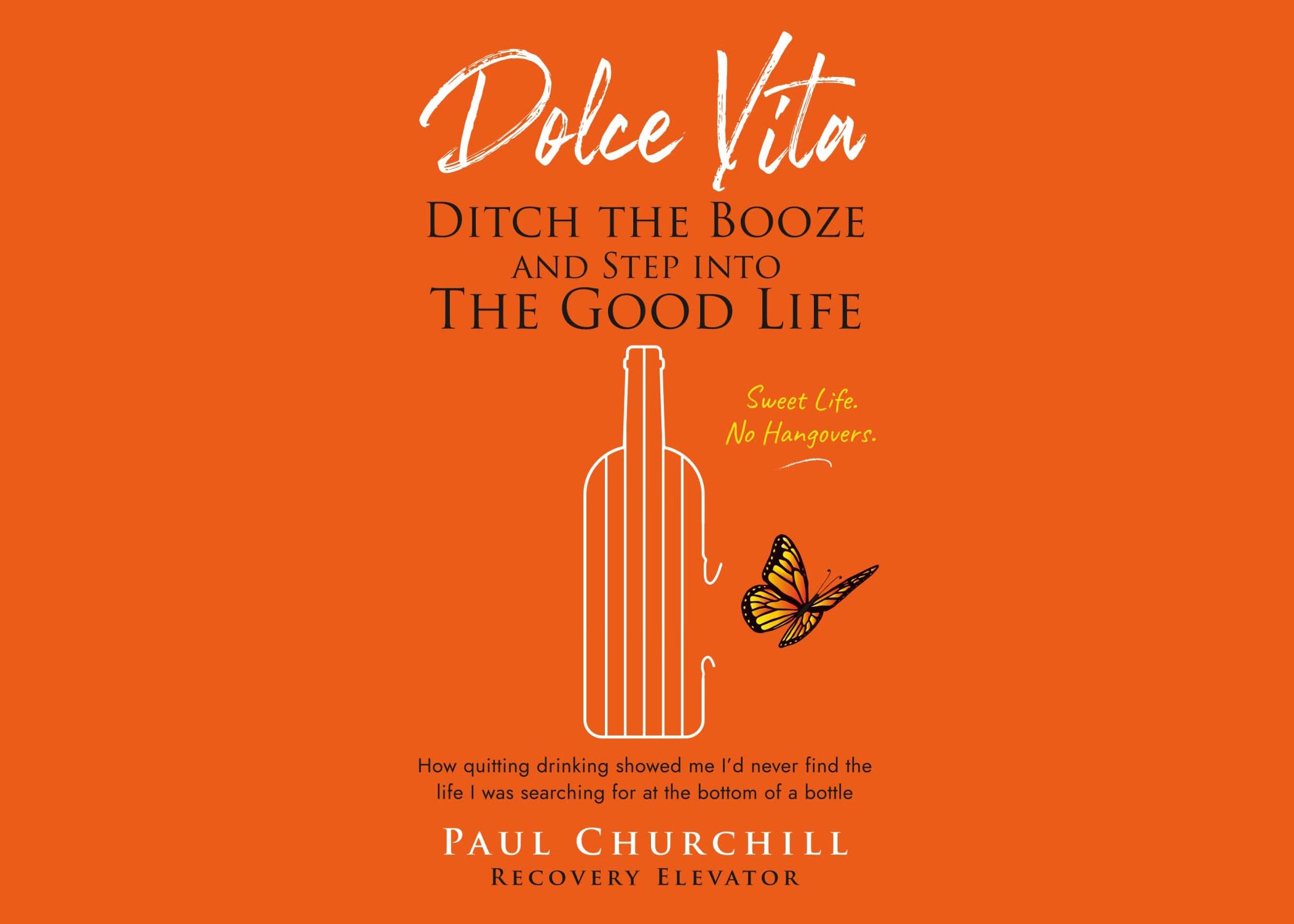
Most quit-lit books fall into one of two categories. They’re either instructional, laying out a system you’re meant to follow, or confessional, built around a dramatic rise and fall. Dolce Vita by Paul Churchill does something quieter and, in my opinion, more useful.
It doesn’t tell you how to get sober. It shows you how someone did. And more importantly, it asks you to consider what kind of life you’re actually trying to build once alcohol is gone.
Here are five takeaways that stayed with me.
1. There Is No “Right” Way to Quit Drinking
Churchill says it plainly:
“There is no right or wrong way to quit drinking. AA works for some, but not for everyone.”
That sentence alone will land hard for a lot of people. Many of us come into sobriety already feeling behind, defective, or out of sync. When the first thing we’re told is that there’s a correct path and we’re struggling to walk it, the shame compounds fast.
Dolce Vita doesn’t position itself as a replacement program. It simply removes the idea that you have to earn your recovery by suffering in a prescribed way. The book keeps returning to a simple truth: what matters isn’t whether something works in theory, but whether it fits you in practice.
That framing alone can relieve a lot of unnecessary pressure.
2. Alcohol Isn’t the Problem. It’s the Messenger.
One of the more interesting threads running through the book is the idea that addiction isn’t a moral failure or even the core issue. Alcohol is treated as a signal, not a villain.
Churchill writes that addiction shows up when something deeper is out of alignment. When alcohol stops numbing pain and starts creating it, the body and mind are forced into a reckoning.
That doesn’t make quitting easy. But it reframes it. Sobriety becomes less about deprivation and more about paying attention. What were you using alcohol to manage? What went quiet when you drank? What shows up now that it’s gone?
Those are harder questions than “How do I stop?” but they’re also the ones that lead somewhere.
3. Community Matters More Than Method
Dolce Vita spends a lot of time in rooms. AA rooms. Café RE chats. Retreats. Informal gatherings. The throughline isn’t allegiance to a specific model. It’s the relief of not doing this alone.
At one point Churchill notes that the most effective protection against alcohol isn’t willpower. It’s connection.
That tracks. Isolation feeds addiction. Community interrupts it.
What I appreciated is that the book doesn’t pretend community has to look a certain way. It can be structured or loose. In-person or online. Spiritual or practical. What matters is being seen by people who understand the terrain.
Sobriety, in this telling, isn’t a solitary achievement. It’s a shared one.
4. The Goal Isn’t Sobriety. It’s a Life You Want to Be In.
This is where Dolce Vita really separates itself from a lot of quit lit.
Sobriety is treated as the beginning, not the destination. The book is filled with scenes of music, nature, travel, creativity, and play. Not as rewards for being sober, but as evidence of what becomes possible when alcohol is no longer running the show.
Churchill talks about learning to have fun again. About joy that isn’t borrowed from a substance. About building a life that doesn’t require escape.
That matters. Because if sobriety only removes something and doesn’t replace it with meaning, it doesn’t last. A good life isn’t something you white-knuckle your way into. It’s something you gradually learn how to inhabit.
5. You Are Not Broken
If there’s a core message in Dolce Vita, it’s this:
“There is nothing fundamentally wrong with you.”
That idea is easy to dismiss and hard to internalize. Many of us come to sobriety convinced we’re missing a piece everyone else has. The book pushes back on that assumption again and again.
You don’t need to be fixed. You don’t need to earn your way back into wholeness. You already have what you need. Sobriety is framed as a return, not a transformation into someone else.
That’s a generous way to think about recovery. And for people who have spent years feeling defective, it’s a necessary one.
Dolce Vita isn’t a manual. It’s a companion. It doesn’t promise certainty, and it doesn’t simplify the work. What it offers instead is permission: to question the rules, to try different rooms, to prioritize connection, and to build a version of sobriety that actually feels like living.
If you’ve ever wondered whether the problem is that nothing is working or simply that nothing fits yet, this book is worth your time.
Not because it has the answers.
But because it asks better questions.
If None for Me resonates with you, hit the ♡ and subscribe—it helps others find this space and keeps the conversation going. Thank you!